
How Do Generators Work?
Looking For A Specific Post? Search Below
How Do Generators Work?
In an unpredictable world where power outages can occur at any time due to a variety of reasons, the need for a reliable backup power source cannot be overstated. Generators play a crucial role in ensuring that your home or business continues to function smoothly even when the local electrical grid is unavailable. At Generator Technologies, Inc., we believe in empowering our customers with knowledge. Below, our technicians guide you through the fascinating process of how generators work.
The Science Behind Generators
Generators do not create electricity from scratch. Instead, they convert mechanical or chemical energy into electrical energy. This conversion is achieved by capturing the power of motion and directing it into an electrical circuit, thereby generating electricity. Essentially, a generator is an electric motor working in reverse.
The principle behind modern generators can be traced back to Michael Faraday’s discovery of electromagnetic induction. He found that moving a conductor within a magnetic field creates electrical charges that can be directed to form a current. It’s like a water pump pushing water through a pipe, but in this case, the generator is pushing electrons through a wire to produce electricity.
Key Components of a Generator
A generator comprises several parts, each playing a critical role in producing and transmitting power. Here are the primary components:
- Engine: Supplies energy to the generator; its power determines the amount of electricity a generator can provide.
- Alternator: Converts mechanical energy to electrical energy.
- Fuel System: Enables the generator to produce energy.
- Voltage Regulator: Controls the voltage of the produced electricity.
- Cooling and Exhaust Systems: Prevent overheating and remove fumes formed during operation.
- Lubrication System: Ensures smooth operation of the generator’s internal parts.
- Battery Charger: Keeps the generator’s startup battery ready for use.
- Control Panel: Manages all aspects of generator operation.
- Main Assembly/Frame: Holds everything in place.
Generator Maintenance: Ensuring Optimal Functionality
Like any engine, a generator requires regular maintenance to function optimally. Regular checks and inspections are vital to ensure the machine operates as needed when needed. Here are some recommended maintenance practices:
- Regular inspection and replacement of worn parts.
- Checking fluid levels, including coolant and fuel.
- Inspection and cleaning of the battery.
- Load bank testing of the generator and automatic transfer switch.
- Checking the control panel for accurate readings and indicators.
- Changing the air and fuel filters.
- Inspecting the cooling system and lubricating parts as needed.
Maintaining a log of all maintenance activities is also recommended. This can help detect operational changes that may indicate hidden issues requiring attention.
Contact Our Technicians
Understanding how generators work and the importance of their maintenance is crucial for anyone relying on them as a backup power source. At Generator Technologies, Inc., we’re committed to helping you navigate through this process. Whether you need a new installation, service, or regular preventative maintenance, our expert team is ready to assist. We offer proven solutions to help you overcome the challenges of recurring power outages. Contact us today for a free, no-obligation in-home estimate. Let us provide you with the peace of mind that comes from knowing you’re prepared for any power outage.
Related Blog Posts
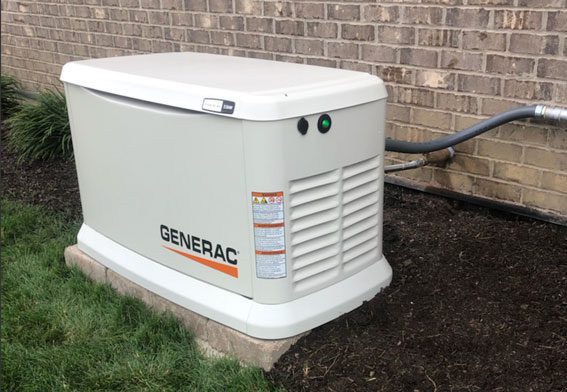
What Do the Lights on My Generac Generator Mean?
When the power goes out, your Generac generator should be your home's silent guardian, kicking in automatically to keep the lights on and the refrigerator running. So when it speaks to you through the simple visual language of LED indicator lights, it’s time to listen. Understanding what these colors mean…

How to Prepare for Future Power Outages in Northwest Indiana?
Northwest Indiana has seen its share of severe storms, and the outages they leave behind can stretch for days. If your home or business lost power during a recent weather event, you already know how disruptive it can be. You do not have to wait for the next storm to…
Will Running Out of Fuel Damage Your Generator During an Outage?
If your generator runs out of fuel during a power outage, it can be very worrying. You may wonder if you've damaged your generator, or if there is anything you need to do to rectify this issue. Here at Generator Technologies, Inc., we want to provide you with peace of…
Google Reviews
Steve and team were timely, professional, and honest. Great service from beginning to end. Took time to review everything with me. A whole house generator is a big investment & I’m glad I chose Generator Technologies as my provider.

Highly regarded in the area and definitely the go-to for all things power. Family-owned and ran business that should be part of your consideration if maintenance or are adding a generator to your property.
After much communication between Generac, the company, and Generator Technologies, which installed the unit, progress has been made. Despite Generac offering little to no help and not standing by its product, Generator Technologies has been working with me to make...
Highly recommend Generator Technologies! Their pricing was very fair and competitive, and the team was professional, efficient, and easy to work with. They completed the job quickly and made sure everything was cleaned up before they left. Great experience from...
We purchased the property a year ago and the Generac was included. The previous owners did provide some information on the services performed. After a year of operation it was time to have the unit serviced. Based on the reviews...
Amazing customer service! Everyone from the front desk to the installation crew was extremely professional and knowledgeable. Install was quick! 10/10 I would highly recommend this company!
During a recent and extended power outage, my generator was running for approximately 18 hours. I noticed it was leaking oil. I called Generator Technologies, this was a Friday afternoon, so I didn't expect anyone to come out until the...
Great guys. Senior came out, gave me a quote to install my generator. Junior installed a short time later. Done a great job and good price. I needed there service again, Junior came out and did what he needed to....
I can't say enough about the service I received from them. I've never used them before but I will always use them from here on out. I was lucky enough to have them out at my house 1 hour after...
What an excellent company! From the consultation to the estimate to today's install - perfectly flawless. In addition to the knowledge of all the technicians, they were the nicest group of guys we've ever had work at our home. They...


Financing Available*
Flexible options to secure reliable power
solutions for your home, family & business!
Contact Us Today For A Free Estimate
708-672-6251
Contact Us For A Free
No Obligation In-Home Estimate


*Certain restrictions apply. Financing is subject to credit approval. Financing is offered through Generac Power Systems, Inc. Financing is not provided by nor determined by Generator Technologies, Inc. Not all applicants will qualify for the 0% financing
The information on this website is for informational purposes only; it is deemed accurate but not guaranteed. It does not constitute professional advice. Testimonials are not a guarantee, warranty or prediction of what your experience with us will be. By providing certain contact information herein, you are expressly authorizing the recipient of this message to contact you via the methods of communication provided.
NUVEW | Copyright 2026 Generator Technologies Inc. All Rights Reserved. | Accessibility Notice | Privacy Statement